








Accessible video training ensures that all learners can access and understand content through captions, transcripts, clear visuals, audio support, and accessible controls. More than a compliance requirement, accessibility promotes inclusion, engagement, and effective learning. The Americans with Disabilities Act (ADA) protects people with disabilities from discrimination, and digital content such as instructional videos can fall under those protections — official ADA.gov guidance is the best place to review what applies to your organization.
Accessibility standards can be hard to tackle at first. Many L&D teams want to create inclusive training, but don’t know where to start. Start with a small set of repeatable checks, then build them into every training video workflow.
Building accessibility into your training process is a manageable step, and it makes a real difference to your learners right away.
Key takeaways
- Training video accessibility starts with access: learners need more than one way to receive, review, and use the material.
- Captions, transcripts, clear visuals, audio descriptions, and accessible controls help more people complete training with fewer barriers.
- ADA, WCAG, and Section 508 considerations should be planned before recording, not added after the final export.
- Camtasia workflows can support accessible training with captions, transcripts, cursor effects, templates, and visual reference materials.
What does video accessibility really mean?
Designing accessible training video means:
- Including on-screen closed captions (subtitles) and transcripts
- Offering audio descriptions when conveying critical visual information
- Designing with readable, low-clutter visuals
- Ensuring compatibility with keyboard navigation and screen readers
- Including alternative text (alt text) for on-screen visuals
These terms work together, but they do different jobs:
- Captions show spoken words and important sounds on screen so learners do not have to rely only on audio.
- Subtitles usually translate or display speech for learners who can hear the audio but need text support.
- Transcripts provide the full spoken content in text form for review, search, documentation, or assistive technology.
- Audio descriptions explain important visual information that is not already described in the narration.
- Alt text describes supporting images or visuals so screen reader users can understand their purpose.
TechSmith’s Value of Visuals report found that two out of three employees carry out tasks better when communicated visually vs. non-visually. By including visuals in learning content, trainers have the chance to help out over half of their viewers, even if they do not have a disability.
As Camtasia’s own subject matter experts (SMEs) have noted, “Captions (standard or dynamic) are important for clarity, accessibility, browsability, and allow viewers to follow along if they are in an environment where they can’t, or choose not to, turn on their audio.”
Beyond video, website accessibility is commonly guided by the Web Content Accessibility Guidelines (WCAG), a widely used framework meant to help ensure equal access to multimedia components on your website. Since online videos are often hosted on a website, trainers need to round out the learning experience through legal compliance.
What accessibility mistakes should training teams avoid?
The most common accessibility mistake is treating accessibility as a final add-on instead of a design requirement. Even some of the most well-meaning training teams can fall into common traps when creating accessible content. That mindset can lead to issues that create extra work down the line.
Let’s dive into common missteps and what you can learn from them.
No captions or transcripts leave deaf and hard-of-hearing people, ESL learners, mobile viewers, and anyone in a noisy environment without the means to get all the information. Without supplementing audio content, you’re unintentionally locking out a large part of your audience who need text alternatives to follow along.
Cluttered and low-contrast visuals are hard to focus on, especially for people with visual or cognitive differences. If your video is packed with text, flashing elements, or a low color contrast design, it will be tough for your audience to process valuable information. Simplify and clarify any busy visuals before you publish your video.
Fast-paced, unstructured content doesn’t allow learners to follow along with the material at their own pace. If the content lacks a clear flow, they’re also more likely to disengage. Structure your video, add in meaningful pauses, and ensure replay options are available for everyone to stay on track.
Forgetting about accessibility until the video is finished makes it harder, slower, and more expensive to fix later. Build accessibility in from the start, and it’s much easier to implement.
These mistakes are common, but think of them as opportunities to build better training that is smarter, more inclusive, and more engaging from the start.
How does accessible training improve learner outcomes?
Accessible training improves comprehension, self-paced learning, and consistency for more learners. When you design video training content that truly considers everyone’s needs, you can unlock better learning outcomes for everyone.
It empowers learners to engage on their own terms
Captions, transcripts, and playback controls help learners review training at the pace and in the format they need. This is crucial for reducing cognitive overload. People who may feel overwhelmed in fast-paced live sessions, like introverted learners and those with anxiety, may especially benefit from these accessibility measures.
It supports global and multilingual teams
Clear visuals and translated captions help distributed teams learn the same process across languages and locations. Camtasia, for instance, offers AI-generated voice translation and script translation, making it easy to produce inclusive content without needing native speakers for every version.
It improves job satisfaction and reduces rework
Clear, accessible training reduces frustration and gives employees a reliable reference they can return to when they need a reminder. On the other hand, employees can revisit the video instead of asking you to repeat a live demo.
Camtasia’s SMEs also point to the efficiency payoff: “Efficiency comes from not having to answer the same questions over and over; instead, teams can refer people to the training video.”
It creates a more inclusive and equitable learning environment
Accessible design helps employees with different abilities and learning preferences participate more fully. It supports learners with disabilities, neurodivergent teammates, and anyone who simply learns differently. Inclusivity builds trust, improves retention, and boosts performance across the board.
Training video accessibility checklist for compliance planning
Use this checklist before you record, while you edit, and before you publish. It is planning guidance, not a legal audit, so review your organization’s requirements and consult the official ADA.gov accessibility guidance, W3C WCAG standards, and Section508.gov guidance where they apply.
- Plan captions with a script before recording so spoken instructions, key sounds, and terminology can be reviewed accurately.
- Create a transcript for each training video so learners can search, skim, and revisit the content outside the player.
- Add audio descriptions, such as narrating that a red X appears on the screen when a step fails, when critical visual information is not explained in the narration.
- Use readable text, strong color contrast, and low-clutter visuals so learners can focus on the task. A tool like WebAIM’s Contrast Checker can confirm your text meets WCAG contrast requirements.
- Confirm the video experience supports keyboard navigation, screen readers, and accessible playback controls where the video is hosted.
- Provide alt text for supporting images, screenshots, and visual reference materials that appear outside the video player.
- Review the final video against the ADA, WCAG, and Section 508 requirements that apply to your organization, audience, and publishing environment.
How can you make training videos more accessible with Camtasia?
Teams can improve accessibility by planning captions, visual clarity, focus cues, and supporting reference materials before they record. Making your training more accessible doesn’t require a total overhaul. In fact, with the right tools, you can start improving today.
Camtasia offers features that make accessibility easier to build into your workflow.
Record your screen with Camtasia
Camtasia makes it easy to share quick updates and how-to’s by capturing exactly what’s happening on your screen. Get Camtasia Snagit
Streamline workflows with Snagit Assets
Transform your screenshots with ready-made templates, custom themes, and unique stamps.
Get Started
Add captions and transcripts to every video
Every training video should include captions and a transcript so learners can access spoken information without relying only on audio. Captions are a win for everyone. With Camtasia, you can auto-generate, import, and manually edit captions to any video. You can export full video transcripts for reference, documentation, or searchable help.
Camtasia makes it easy to add captions and transcripts without slowing down your production schedule.
Use cursor effects and animations to guide focus
Cursor effects and animations help learners follow the exact action being demonstrated in software training. When walking through software or multi-step processes, Camtasia’s cursor effects, like spotlighting and click animations, keep learners focused on what matters. By making the cursor obvious, learners with attention or processing challenges will still be able to follow along and not lose the thread of the content.
Design with visual clarity and contrast in mind
Readable fonts, strong contrast, and low-clutter layouts make training easier to understand. Use a clear, readable font, high-contrast color schemes, minimal clutter, and large, clearly labeled buttons or callouts in your video to improve the clarity of the design. By making important information noticeable, learners are less likely to get lost along the way.
Add text to specific parts of your video to point out important information as well.
Additionally, Camtasia offers brand-friendly templates that balance style with accessibility features. Consistent design practices are also helpful with learning content.
Looking for professional screen recording software?
From simple screen captures to polished video editing, TechSmith has everything you need to create professional-quality content.
Learn More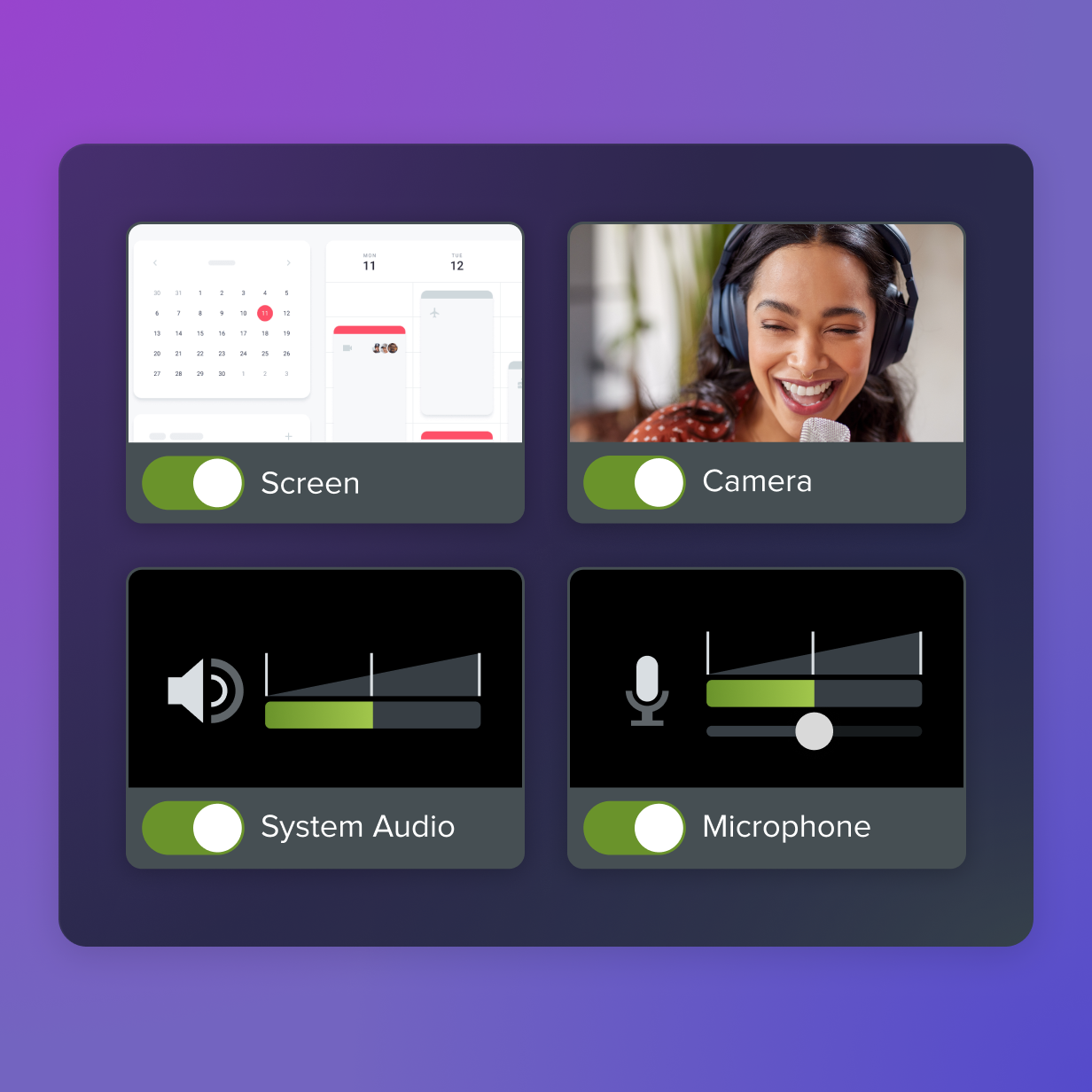
Support your videos with visual reference materials
Annotated screenshots, guides, and SOPs give learners a second way to review the process after the video. Not everything needs to be a video. In fact, reference materials can be visual information like annotated screenshots, step-by-step guides, and quick-reference SOPs. These helpful visuals support best learning practices and engage learners in multiple ways, increasing their knowledge retention.
Camtasia Snagit’s Step Capture feature makes it easy to create step-by-step guides in minutes. With the feature enabled, simply click through your process as you normally would. Camtasia Snagit takes a screenshot each time you click and compiles it into an editable template for you, so you don’t have to spend any time putting together a complicated document.
Why should accessibility be part of every training video workflow?
Accessible video training should be built into the production workflow because it supports compliance, reach, and learner success. The bottom line is this: accessible video training isn’t a nice-to-have; it’s essential for any training content creation process. From onboarding new hires to supporting global rollouts and scaling knowledge across departments, accessibility helps you reach a broader audience.
Luckily, you don’t have to do it alone. Camtasia workflows make it easy to create training that’s inclusive by design. Each tool has tutorials, help articles, and free webinars to help you get started.
Explore the full suite of tools and start making video training that everyone can access, enjoy, and learn from.
Need to show your screen?
Skip the downloads. Use Camtasia online to record your screen, camera, and microphone right in your browser for free.
Start Recording
Frequently asked questions
Do training videos need to be ADA compliant?
Training videos used in workplace or public digital learning should be planned for accessibility from the start. The ADA protects people with disabilities from discrimination, and official ADA.gov guidance is the best place to review current federal information. This article is not legal advice, but captions, transcripts, clear visuals, and accessible controls are practical baseline steps for reducing barriers.
What are the ADA requirements for training videos?
ADA-related video accessibility work usually starts with making the training content usable by people with disabilities. In practice, that often means captions, transcripts, audio descriptions when important visual information is not narrated, readable visuals, and accessible playback support. A single checklist cannot guarantee compliance for every organization, so pair these production steps with your internal accessibility review and current official guidance.
How do WCAG and Section 508 relate to training video accessibility?
WCAG is a widely used framework for making web content more accessible, including multimedia such as training videos hosted online. Section 508 is relevant to U.S. federal digital content and procurement contexts, and the official Section508.gov guidance explains those requirements. For training teams, the practical takeaway is to design videos, players, transcripts, and supporting materials so learners can perceive, operate, understand, and use the content.
What are the 7 pillars of accessibility?
There is not one universally recognized “7 pillars” model for video accessibility. WCAG organizes accessibility around four principles: perceivable, operable, understandable, and robust, as explained in the W3C WCAG standards overview. For training videos, those principles translate into clear media, usable controls, understandable instruction, and content that works with assistive technology.
What are the new WCAG guidelines for 2026?
Do not rely on a fixed future-year summary for WCAG requirements. Before publishing or auditing training videos, check the current W3C WCAG standards page for the latest version and supporting guidance. That keeps your accessibility planning tied to the current standard instead of an outdated article, checklist, or prediction.
Share